View printer-friendly version
What would happen if on one cold and wintery night a heater ceased to operate in an aquarium? If it was a very large aquarium things would probably be okay for a while, but if it was a small one the occupants would soon notice it was winter.
If it was the middle of summer and an air pump stopped operating, in a slightly over-crowded aquarium, then this would spell disaster, as the warmer the water the less oxygen it holds.
It is a good idea to make sure that everything is working in your aquariums. Check the heaters, pumps, filters, airlines, etc., frequently, as it doesn't take long and could save so much.
It pays to have a few spares around and it need not cost a fortune. Why not always keep a spare heater, since maybe you are not too sure about the old one in your aquarium now? If you put a new one in you would feel much better and you would have the old one as a spare. Or you could always do it the other way round, if the one in the aquarium is quite okay.
Check every now and then to see if the contacts on the heater have gone rusty. If so, you may have to clean them to avoid their sticking and cooking your fish. It does not seem to happen frequently but it is better to be aware. Usually it is as well not to tamper with a heater, unless you know what you are doing, but watch out for rusty contacts, cracked glass or the heater just giving up. In actual fact, we should turn off the supply to all electrical equipment before placing a finger in the water, but this is not very convenient. Thankfully, aquarium equipment does seem to have a good safety record, as all electrical goods need to pass quality controls in Australia before being sold, but one should never take all for granted, rather cheek that everything is working and in one piece.
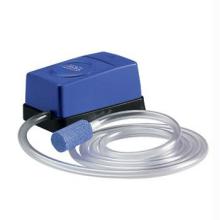
As for pumps, everyone should have spare diaphragms at least. These are usually the reason for failure here and they are inexpensive and easy to replace. There are different sizes of diaphragms for different pumps but all you really need to check is your make of pump and most shops will know the right one. If you have a large pump that takes two or more diaphragms, then you should keep several spares and just in case the problem is more serious, you should have a spare pump. The options are buying a cheap small one or maybe being lucky to pick up a second hand one from a club auction: trash 'n treasure, or a friend, but always make sure it works. Some pumps can almost be rebuilt if necessary, since an amazing range of spares is available for certain makes. So why not try to replace a broken magnetic arm or a burnt out coil, especially if it is a good pump. Don't forget the need to clean out the air chamber, when replacing diaphragms, or even to replace it if need be. Maintenance sets are available for certain models. Back pressure is one cause for early diaphragm failure and it is much better to arrange an airline leading to nowhere and bleeding of excess air, than to have a pump doing only part of its potential output on one or two airstones.
Airstones and airhose will need replacing periodically. More frequently, it will be the airstone. These clog up and when you try to clean them under water, they often crumble. We have tried soaking them in vinegar and then cleaning with a toothbrush but usually with similar outcome. Although there are all sorts of airstones available, most clog and have to be replaced frequently. By all means try to clean them first but keep a few spares. Airhose, on the other hand, lasts pretty well and there are several kinds available also: the usual clear, thin-walled hose, a clear, thick-walled kind, a green, non-kink hose and maybe others that I am unaware of. Here, quality usually costs more but the cheaper version generally lasts pretty well and the problem is easily detected anyway.
For external cannister filters, internal power filters and other types or powerheads, it is wise to carry a few spares. A couple of items you may care to have handy are a spare impeller and a seal-ring, both of which could make the difference between a renewed filter and a wait for parts to come in. There are of course, other parts to filters but these two are the usual sources of failure.
When you purchase an electrical item there is usually an information booklet or leaflet packed with it, showing how it works and the part descriptions. These are very useful, so always keep them together in a folder, for future reference.
Who turned the lights out? Yes I have thought of another necessary spare: light tubes. These may not be so urgent as the others mentioned but for some people they can be important, especially for plant enthusiasts or marine aquarium keepers. Don't forget that the starters in the fittings may also need replacing before they crumble up and are difficult to remove.
No-one can tell when a diaphragm may give up or when an impeller may fail but some things show when they are wearing out. But it's just as well to be prepared. I may not have listed everything but I have tried to cover the most common problems of equipment failure that aquarists are likely to encounter.
What's that I hear you say? What about a spare tank - well that goes without saying: Everyone needs another tank.
Article by Deborah Ralph |