Bookmark Us
  Fish Profiles

Blue Ahli (Sciaenochromis ahli)

Electric Blue Johannii (Melanochromis Johanni)

Electric Yellow Lab (Labidochromis Caeruleus)

Giraffe Cichlid (Nimbochromis Venustus)

Kenyi (Pseudotropheus lombardoi)

Livingstonii (Nimbochromis livingstonii)

Melanochromis Auratus

Peacock Cichlid (Aulonocara hansbaenschi)

Red Top Hongi (Labidochromis hongi)

Red Zebra (Metriaclima estherae)

Sunshine Peacock (Aulonocara baenschi)

Yellow Tail Acei (Pseudotropheus Acei)

Cylindricus (Neolamprologus cylindricus)

Frontosa (Cyphotilapia frontosa)

Lemon Cichlid (Neolamprologus leleupi)

Kribensis (Pelvicachromis pulcher)

Zebra Obliquidens (Astatotilapia latifasciata)

Gold Nugget Pleco (Baryancistrus sp L177, L085, L018)

Pictus Catfish (Pimelodus Pictus)

Striped Raphael Catfish (Platydoras Costatus)

Discus (Symphysodon aequifasciatus)

Firemouth Meeki (Thorichthys Meeki)

Green Severum (Heros severus)

Jack Dempsey (Archocentrus Octofasciatus)

Oscar (Astronotus ocellatus)

Clown Loach (Chromobotia macracanthus)

Kuhlii Loach (Pangio kuhlii)

Figure Eight Puffer (Tetraodon biocellatus)

Green Spotted Puffer (Tetraodon Nigroviridis)

Black Tetra (Gymnocorymbus Ternetzi)

Neon Tetra (Paracheirodon innesi)

Silver Dollar (Myletes rubripinnis)

Common Goldfish (Carassius auratus auratus)

Betta Fish (Betta Splendens)

Blue Gourami (Trichogaster trichopterus)

Pink Kissing Gourami (Helostoma temminckii)

Wine Red Betta (Betta coccina)

Guppy (Poecilia reticulata)

Sailfin Molly (Poecilia velifera)

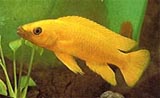
  Lemon Cichlid (Neolamprologus leleupi)


Lemon Cichlid (Neolamprologus leleupi)

Scientific Name: Neolamprologus leleupi


Common Name(s): Lemon Cichlid, Leleupi, Lemon Lamprologus


Family: Cichlidae


Species Type: African Cichlid, Lake Tanganyika


Maximum Size: 4.5 inches


Life Span: 9 years


Natural Habitat: East African Lake Tanganyika


Minimum Tank Size: 29 gallons


Tank Region: Middle to bottom of tank.


Possible Tank Mates: Other Tanganyika cichlids


Decription: A small and attractive species, this fish gets its common name of "Lemon Cichlid" from its bright yellow appearance. It may have some darker color around the mouth and red on the gill plates. Keep these guys in a tank with plenty of rocky territories and an alkaline pH.


Temperature Range 74°F - 82°F

     
60°F
65°F
70°F
75°F
80°F
85°F
90°F


pH Range 7.6 - 9

     
pH 5.0
pH 6.0
pH 7.0
pH 8.0
pH 9.0


Hardness 8° - 18°

     
0°
10°
20°
30°
40°


Breeding Information: As these are monogamous fish, which do not readily form pair bonds, the method of raising a half dozen, or more juvenile to maturity and allowing them to pair off is recommended.


Sexing Information: Males and females of similar ages may display size disparity (the male being the larger of the two). Males may get a rudimentary version of the nuchal hump displayed by many of the larger cichlids. Females may exhibit more of a slope in their forehead as well as a rounded pelvic fin.


Temperment: Generally peaceful but may become territorially aggressive while spawning.


Diet: Omnivorous - Live; crustaceans, insect larvae, aquatic insects; large flakes; pellets. This fish must be fed a varied diet to bring out its beautiful colors.


Common Diseases: None specific to species