Fish Profiles

Blue Ahli (Sciaenochromis ahli)

Electric Yellow Lab (Labidochromis Caeruleus)

Giraffe Cichlid (Nimbochromis Venustus)

Kenyi (Pseudotropheus lombardoi)

Melanochromis Auratus

Peacock Cichlid (Aulonocara hansbaenschi)

Red Top Hongi (Labidochromis hongi)

Red Zebra (Metriaclima estherae)

Sunshine Peacock (Aulonocara baenschi)

Yellow Tail Acei (Pseudotropheus Acei)

Cylindricus (Neolamprologus cylindricus)

Frontosa (Cyphotilapia frontosa)

Lemon Cichlid (Neolamprologus leleupi)

Kribensis (Pelvicachromis pulcher)

Zebra Obliquidens (Astatotilapia latifasciata)

Gold Nugget Pleco (Baryancistrus sp L177, L085, L018)

Pictus Catfish (Pimelodus Pictus)

Striped Raphael Catfish (Platydoras Costatus)

Discus (Symphysodon aequifasciatus)

Firemouth Meeki (Thorichthys Meeki)

Green Severum (Heros severus)

Jack Dempsey (Archocentrus Octofasciatus)

Oscar (Astronotus ocellatus)

Clown Loach (Chromobotia macracanthus)

Kuhlii Loach (Pangio kuhlii)

Figure Eight Puffer (Tetraodon biocellatus)

Green Spotted Puffer (Tetraodon Nigroviridis)

Black Tetra (Gymnocorymbus Ternetzi)

Neon Tetra (Paracheirodon innesi)

Silver Dollar (Myletes rubripinnis)

Common Goldfish (Carassius auratus auratus)

Betta Fish (Betta Splendens)

Blue Gourami (Trichogaster trichopterus)

Pink Kissing Gourami (Helostoma temminckii)

Wine Red Betta (Betta coccina)

Guppy (Poecilia reticulata)

Sailfin Molly (Poecilia velifera)

  Frontosa (Cyphotilapia frontosa)


Frontosa (Cyphotilapia frontosa)

Scientific Name: Cyphotilapia frontosa


Common Name(s): Frontosa, Hump Head, Hump Head Cichlid


Family: Cichlidae


Species Type: African Cichlid, Lake Tanganyika


Maximum Size: 16 inches


Life Span: 15 years


Natural Habitat: African Lake Tanganyika


Minimum Tank Size: 150 gallons


Tank Region: Bottom to middle of tank


Possible Tank Mates: Other frontosa


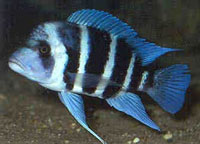
Decription: The Frontosa's body has six black stripes on a white background. The extremities will stay white or light blue in color. Both the male and the female will develop the cranial hump on the forehead but the male hump will be larger and more pronounced. The fish in the picture above is a juvenile because it has no cranial hump. They are a gently tolerant community fish and don't look for trouble, but they will defend a territory once they have established one. Even though they are quite peaceful beware of keeping smaller fish in your aquarium. The Frontosa will stealthily snatch up a small fishy snack if it is available! These are deep water fish rather than cave dwellers. They are best kept in groups of 8 to 12 in a very large aquarium with plenty of room to swim. A 150 gallon aquarium is recommended with a sandy bottom and rock structures creating fissures to hide in. Though plants are not essential, they do not burrow and will not harm them.


Temperature Range 74°F - 79°F

     
60°F
65°F
70°F
75°F
80°F
85°F
90°F


pH Range 7.8 - 9

     
pH 5.0
pH 6.0
pH 7.0
pH 8.0
pH 9.0


Hardness 10° - 20°

     
0°
10°
20°
30°
40°


Breeding Information: Frontosa are harem spawners. Wild fish do best when one male is in a tank with 4-6 females. You can have more than one male but he will be harassed. Some people will put 2 or 3 males with 10 to 12 females in a homemade 400+ gallon tank. A large breeding colony can produce a hundred fry a month. Two things worth pointing out is that C. frontosa have huge eggs and that the incubation period for the eggs in excess of thirty days.


Sexing Information: A large nauchal hump usually indicates the dominant male but is not always the case. Males grow larger and quicker than females so if a group has grown up together the largest is most likely a male. If the dominant male is removed a subdominant male will take its place. The most reliable way to sex these fish is by 'venting', which involves viewing the sex organs. There are two holes on each fish. The one towards the top is the anus. The one towards the bottom, closet to the anal fin, is the sex


Temperment: Peaceful and a bit shy


Diet: Omnivorous - does well with flake or pellet food. Can be fed freeze-dried or frozen krill or plankton as a treat.


Common Diseases: None specific to species