Aquariumlife.net - Articles, forums, DIY projects and more! Puffer Fish, Oscar and African Cichlid
 
Bookmark Us
 Search

Web

aquariumlife.net


 Recent DIY Projects

Make Your Aquarium an "Endless Aquarium"

DIY AQUARIUM - OTHER


Quick and Beautiful DIY Fish Cave Made From a Coconut!

DIY DECORATION PROJECTS


Quick and Cheap Do It Yourself Airstone

DIY AIRSTONE PROJECTS


Sump Model F

DIY SUMP PROJECTS


Building an Aquarium Cabinet

DIY AQUARIUM STAND PROJECTS


Compact Standpipe Design for Hang-on Overflow Boxes

DIY OVERFLOW PROJECTS


DIY Tool to Drain, Fill and Clean Gravel (Similar to Python)

DIY AQUARIUM TOOLS PROJECTS


DIY Overflow Box

DIY OVERFLOW PROJECTS


 Recent Articles

Your First Cichlid Aquarium

GENERAL CICHLID ARTICLES


Tropical Aquarium Plants for Beginners

AQUATIC PLANTS ARTICLES


All About Dissolved Oxygen

POND CARE ARTICLES


pH Explained

POND CARE ARTICLES


Pond Water Chemistry

POND CARE ARTICLES


Repairing a Leaky Aquarium

AQUARIUM CARE ARTICLES


Designing a Planted Aquarium

AQUATIC PLANTS ARTICLES


How to Make a Moss and Shrimp Planted Aquarium

AQUATIC PLANTS ARTICLES


 Tools

CALCULATORS

Aquarium capacity calculator

Hex aquarium capacity calculator

Fish quantity calculator


CHARTS

Freshwater Compatibility Chart


 Highlights

Coming Soon:  Aquariumlife.net OscarCam!Welcome

Welcome to aquariumlife.net. - A complete source of information on aquariums, tropical fish and equipment. We have a wide variety of articles about aquariums, tropical fish, african cichlids, oscar fish and more. Please feel free to register on our forums to ask questions or just chat with other people who love aquarium life! We are constantly adding new content to enhance the value of our site. We have several projects planned including photo galleries, additional aquarium calculators and an aquarium web cam of Keith Pardee's 90 gallon oscar aquarium. Check back from time to time to see our updates!


Do It Yourself and Save!

Our DIY projects section contains many DIY plans for filters, decorations, tank stands and more. If you are an aquarist on a budget, then the DIY projects can save you hundreds or thousands of dollars! Don't let a budget restraints prevent you from providing your fish with all of the equipment they need to be happy and healthy. Click here to visit our DIY Projects section today.


 New Features Added

Fish Profiles

We have added a fish profile database to our website. Species are added daily to the fish database.


Aquarium Capacity Calculator

Have you purchased a used aquarium and never really knew your capacity? Planning on building a custom aquarium and want to know how big it needs to be to hold 300 gallons? Our Aquarium Capacity Calculator can tell you the gallon capacity and weight when full of water and decorations.


Hexagonal Aquarium Capacity Calculator

If you have a hexagonal aquarium, try this calculator to compute your hex tank volume.


Fish Quantity Estimator

Wondering how many fish you can fit in a given tank size? Use our handy tool to determine how many 6 inch cichlids you could fit into your 125 gallon tank or how many guppies you could fit in your 29 gallon tank.


 Article of the Day

Buying New Fish


Few things are more disappointing to a hobbyist than buying this really wonderful new fish found in a shop, only to see it wither and die within a week. Possibly the most frequent cause of such deaths is the lack of research on the owner's part, regarding the fish's water requirements (pH, temperature, hardness), feeding habits, compatibility with other fish in the tank, etc.
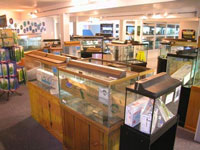
 

Fish shop

But even if you're a more experienced fishkeeper and do your homework right before buying, some fish are still lost that way. Let's consider a few ideas on how to further avoid this.


Bringing new fish home from a store is always stressful to them, and some fish are especially sensitive to any sudden changes, such as Ram's, Clown Loaches and Neons. But for any fish, several conditions can worsen the process to the point of fatality. The most important things to observe are:


General condition of the fish
Healthy fish will stand a much better chance of surviving the stress of moving. Always choose the brightest colored, smartest swimming fish in the group. If possible, check the fish's appetite too. This can sometimes be as simple as sliding your finger on the front glass and seeing which fish follow it around. Of course, many species are healthy but too shy to do this.


Differences in pH and temperature
It is often said that the best water parameters for a fish are the ones it's in right now. This is a wisecrack way of saying that fish do not like sudden changes. A change of more than 0.2 in pH or 2 degrees in temperature in a period of less than 8 hours is stressful, and can be fatal. So even though your tank is optimal for the fish, he'll suffer a shock if the shop tank's water is too different from yours. Ask the shop keeper at which level he maintains these parameters in the tank you're choosing the fish from. If you're not satisfied with his answer ask him to do the test in front of you. I once had a problem with some new Ram's dying, even though my water was optimal, and later found out that the shopkeeper kept them in tanks with pH around 8.0, while mine was at 7.0.


Netting the fish
If the shopkeeper chased the fish around for too long, better change your mind. It could be hurt or panicked to the point of dying. Don't feel bad about doing this...you don't owe the shopkeeper anything and it's his obligation to catch the fish without stressing it. I usually get to know the shopkeepers well enough that they let me catch my own fish from the tank. This way I can choose exactly the ones want and net them the way I want.


Transporting the fish home
Make sure the fish has a reasonable amount of water in the bag. Always transport the fish in the dark, it calms them down. I like to wrap the bag in a cotton pullover to keep it dark and help maintain the temperature. If you're going to take more than a couple of hours to get home or if there are several fish in the same bag, ask the shopkeeper to put oxygen in it.


Releasing the fish
Before releasing the fish into your tank, float the bag for at least 10 min, during which you should slowly add your tank water to the one in the bag. This helps adjust the pH and temperature of both waters. After this, throw the water in the bag away and release the new fish into the tank. If you're worried that some of the older fish might attack the newcomers, turn off the lights and/or throw some food in the tank to distract them until the new fish can find a suitable hiding place.

Finally, if after all these precautions, you still lose a fish soon after putting it in the tank, then the only reasonable explanation left is that really, really terrible affliction known among aquarists as MFD - mysterious fish death :-)


Article by Marcos A. Avila


 Latest Posts

get the valves, it makes

Posted By: fantasticaqua

get the valves, it makes...


Zebra Obliquidens

Posted By: Keith Pardee

In local fish shops, it ...


Nice Looking fish, whats

Posted By: fantasticaqua

Nice Looking fish, whats...


I like the site too!!! I

Posted By: fantasticaqua

I like the site too!!! I...


Oscar talk

Posted By: Keith Pardee

Hello Solo - welcome to ...


My Astatotilapia latifasciata is holding!

Posted By: Keith Pardee

After figuring out what ...


If you like our site, please vote for us by clicking the buttons below


Aquariumrank.com - Ranking the Top Aquarium Sites on the Internet The Top Aquarium Fish Sites Aquarium Rater, how does your Aquarium Website Rate?